

How to Turn Busyness Into Measurable Progress
In a world bursting at the seams with to-do lists, planners, and apps that promise to revolutionize your efficiency, it can feel like you’re always in motion yet never arriving. If your days are full but your goals remain untouched, it may be time for a productivity audit.
This isn’t about adding another system to an already crowded stack. A productivity audit is about stepping back, examining how your time is actually spent, and realigning your workflow so your effort produces meaningful results. When done correctly, it transforms time from something you chase into something you intentionally invest.
The Real Problem: Busy ≠ Productive
Most people equate long hours with effectiveness. The result is a quiet frustration—working all day, ending exhausted, and still feeling behind. Research frequently cited in Harvard Business Review suggests a significant portion of the workday is lost to low-value activity, interruptions, and inefficiencies.
The issue isn’t effort. It’s direction.
A productivity audit helps you identify where your attention leaks, where your energy is misallocated, and which tasks actually move your life or career forward. Instead of reacting to incoming demands, you regain the ability to design your days with intention.
Why a Productivity Audit Works
A productivity audit works because it replaces assumption with evidence.
Most people think they know where their time goes. In reality, perception is unreliable. A structured audit introduces three powerful forces:
- Awareness – You see your habits clearly, without judgment.
- Prioritization – You distinguish between motion and progress.
- Optimization – You redesign workflows based on real data, not guesswork.
Like a financial audit reveals spending habits, a productivity audit reveals how you spend your most finite resource: attention. Once visible, inefficiencies become solvable.
The Productivity Audit Protocol
Rather than a rigid system, think of this as a repeatable framework you can adapt to any phase of life or work.
- Collection – Track how your time is actually spent
- Evaluation – Identify inefficiencies and distractions
- Prioritization – Clarify what truly matters
- Optimization – Redesign workflows for leverage
- Execution – Implement with structure
- Review & Adjust – Refine continuously
This process turns productivity into an evolving practice rather than a one-time fix.
Step-by-Step: How to Run a Productivity Audit
Step 1: Collection — Track Reality, Not Ideals
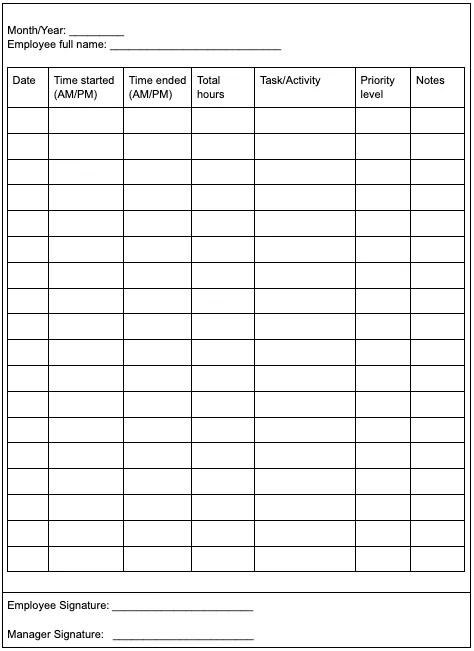
For one to two weeks, log your time in detail. Use a time-tracking app, spreadsheet, or notebook—simplicity matters more than tools.
Track:
- Start and end times
- Task description
- Context (meetings, deep work, breaks, distractions)
Include everything. Meetings, scrolling, emails, transitions—nothing is too small. The goal is accuracy, not self-criticism.
Step 2: Evaluation — Sort the Signal From the Noise
Once collected, categorize your activities into three groups:
- High-impact tasks that directly support your goals
- Necessary but low-impact tasks
- Unproductive or distracting activities
Patterns will emerge quickly. Many people discover that email, meetings, or context-switching consumes far more time than expected.

This step alone is often eye-opening—and uncomfortable. That discomfort is useful. It signals where change matters most.
Step 3: Prioritization — Focus on What Moves the Needle
Use a prioritization framework such as the Eisenhower Matrix to classify tasks by urgency and importance:
- Urgent & Important: Complete or delegate immediately
- Important but Not Urgent: Schedule intentionally—this is where growth lives
- Urgent but Not Important: Delegate or minimize
- Neither Urgent nor Important: Eliminate
High performers protect time for important-but-not-urgent work. Without this step, productivity audits fail by optimizing the wrong tasks.
Step 4: Optimization — Redesign for Leverage
Now redesign your workflow around your priorities.
Common optimization strategies include:
- Time blocking for deep work
- Batching similar tasks (email, admin work)
- Automation for repetitive processes
- Energy alignment, scheduling demanding work during peak focus windows
If creative thinking is strongest in the morning, protect that time. Save administrative work for low-energy periods. Productivity improves when effort aligns with biology.
For a deeper scientific perspective on focus and deep work, Cal Newport’s research on attention and cognitive performance is a strong external reference:
https://www.calnewport.com/books/deep-work/
Step 5: Execution — Structure Beats Motivation
Execution is where most systems collapse—not because the plan is flawed, but because structure is missing.
Create guardrails:
- Fixed deep-work windows
- Defined meeting boundaries
- Clear start and stop times
Your environment should make the right behavior easier and the wrong behavior harder. Motivation becomes optional when systems are clear.
Step 6: Review & Adjust — Make It a Living System
A productivity audit is not a one-time event. Schedule regular reviews—weekly or monthly—to assess:
- What’s working
- What feels forced
- Where priorities have shifted
Effective workflows are adaptive. Life changes; your systems should too.
Common Productivity Audit Mistakes
- Overcomplicating the process – Complexity kills consistency
- Failing to act on insights – Awareness without action changes nothing
- Ignoring rest and recovery – Productivity collapses without energy
- Setting unrealistic expectations – Sustainable beats heroic
- Rigid scheduling – Flexibility preserves momentum
Progress comes from refinement, not perfection.
A Simple Quick-Start Guide
If this feels overwhelming, begin here:
- Track one week of time
- Identify one major inefficiency
- Make one high-impact change
- Review after seven days
- Repeat
Small adjustments compound faster than dramatic overhauls.
Final Reflection: Productivity as Self-Respect
A productivity audit is more than an efficiency exercise. It’s an act of self-respect.
When you audit your workflow, you’re deciding that your time—and attention—deserve intention. You stop reacting and start designing. Over time, busyness gives way to clarity, and effort translates into progress.
Productivity isn’t about doing more. It’s about doing what matters—on purpose.
For more mental health and wellness resources visit our eBooks page.




Leave a Reply