
Introduction
Modern capitalism didn’t set out to make people lonely.
But it sure profits from it.
What we now live inside is not merely a social crisis or a psychological epidemic—it is an economic system quietly cashing in on fostering human disconnection. Across industries, a sprawling, multi-sector marketplace has emerged to monetize the absence of intimacy, community, and meaning. Call it what it is: the loneliness economy.
This economy does not sell loneliness directly. It sells solutions to the pain loneliness creates—endless substitutes for belonging that never quite satisfy, ensuring repeat customers. The result is a trillion-dollar feedback loop where isolation becomes both the problem and the profit center.
Money Over Love: College, Career, and the Engineered Exodus
Modern economic life implicitly teaches a hierarchy of values: money first, relationships later.
Education and career pathways reward mobility, flexibility, and detachment. Remaining close to family or embedded in long-term community often carries an unspoken cost. From a psychological standpoint, this tradeoff is not neutral.
According to Social Baseline Theory, the human brain assumes proximity to trusted others as the default condition; when social support is absent, the brain expends more metabolic and cognitive resources to manage stress (Beckes & Coan, 2011). Life becomes harder not metaphorically, but biologically.
Capitalism does not price this cost. Individuals absorb it privately.
For many, adulthood begins with a sanctioned rupture. College removes young adults from their families during a critical period of attachment consolidation. Careers then extend this separation indefinitely, scattering people across cities and time zones.
From an evolutionary and neurobiological perspective, this is profoundly mismatched with human design. Cacioppo et al. demonstrated that chronic loneliness heightens threat sensitivity and alters neural processing of social cues, increasing vigilance and withdrawal over time (Cacioppo & Hawkley, 2009).
What is framed as independence often functions as prolonged nervous-system stress.
The Fracturing of Shared Culture: Dating Apps, Porn, and the Commodification of Intimacy
Loneliness is not only interpersonal; it is cultural.
Shared narratives once synchronized attention and reinforced belonging. Today, streaming platforms and algorithmic feeds fracture culture into hyper-niches. Psychological research on social identity shows that shared meaning and collective participation reduce perceived isolation and increase trust (Haslam et al., 2018).
Customization maximizes engagement.
Fragmentation erodes cohesion.
Intimacy has been reorganized around efficiency and abundance.
Dating apps turn relationships into marketplaces governed by choice overload and disposability. Pornography decouples sex from attachment and vulnerability. Research on parasocial and mediated intimacy suggests that repeated exposure to low-stakes, one-sided sexual or romantic stimuli can reduce empathic accuracy and relational motivation over time (Giles, 2002; Sun et al., 2016).
Virtual intimacy simulates closeness while bypassing its demands. Emotional attunement weakens without use. Real relationships begin to feel inefficient by comparison.
Psychological Effects
Loneliness is not merely an emotion; it is a physiological condition.
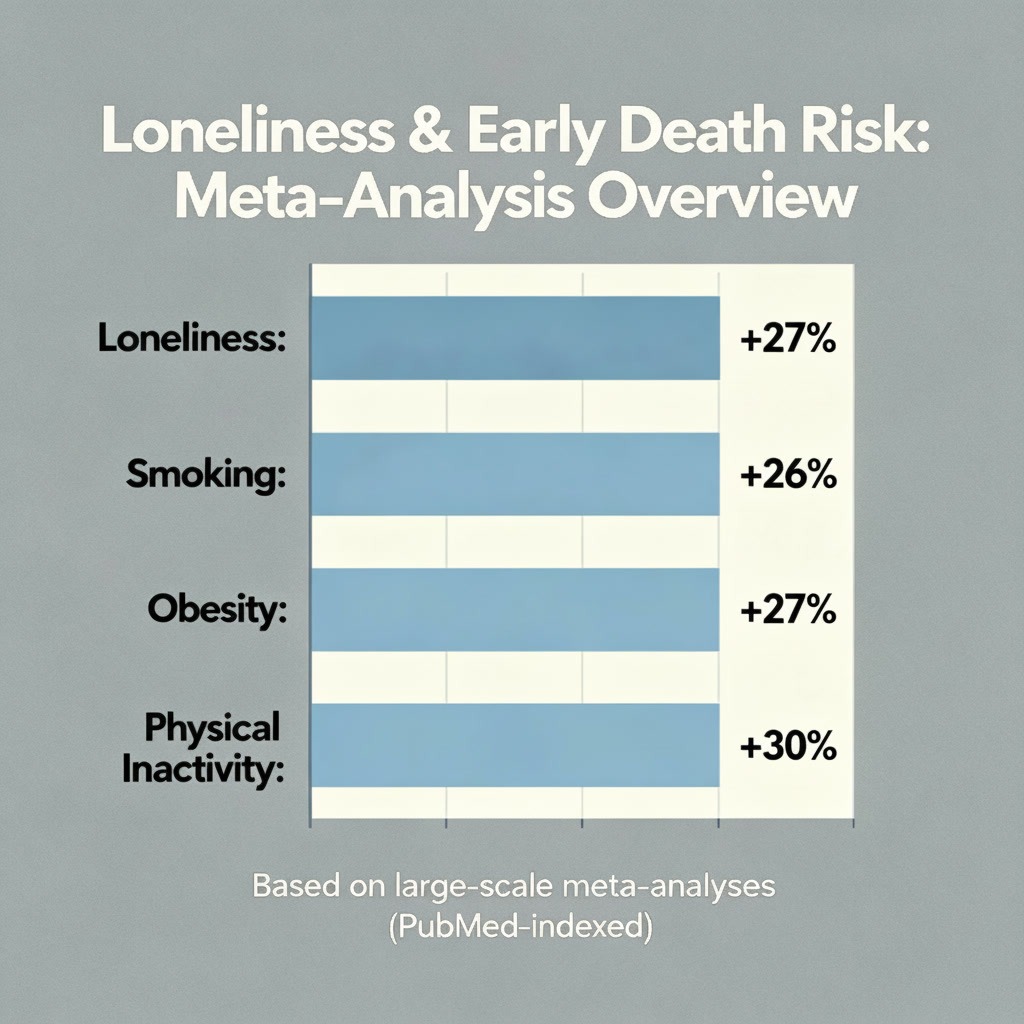
A landmark meta-analysis by Holt-Lunstad et al. (2015) demonstrated that social isolation and loneliness increase all-cause mortality risk at levels comparable to smoking and obesity. Loneliness is associated with increased inflammation, impaired immune function, sleep disruption, depression, and cognitive decline.
Crucially, loneliness is self-reinforcing. Heightened vigilance and withdrawal reduce opportunities for reconnection, creating a downward spiral that feels personal but is structurally induced.
How Capitalism Benefits: Numbing Pain and the Feedback Loop
From a market perspective, loneliness is a high-yield emotional state.
Research on affect-driven consumption shows that negative emotional states increase impulsive spending, binge media use, and compulsive behaviors (Baumeister, 2002). Loneliness predicts increased screen time, higher subscription retention, and greater engagement with emotionally charged digital content.
The system does not resolve disconnection. It monetizes its symptoms.
Rather than repairing connection, the loneliness economy offers numbing agents: entertainment, shopping, food, pornography, substances, endless digital stimulation.
Isolation increases psychological pain.
Pain drives consumption.
Consumption displaces real connection.
Disconnection deepens isolation.
This loop is not conspiratorial. It is incentive-aligned.
The Real Cost
The revenue is enormous. The externalities are diffuse.
Rising depression and anxiety.
Declining birth rates.
Eroded trust between men and women.
Shortened life expectancy.
Public health and psychological research consistently identify social disconnection as a central risk factor across these outcomes. These are not anomalies. They are signals.
Breaking the Loop
Loneliness cannot be solved with better products.
The evidence is clear: social connection itself is protective. Stable relationships, shared rituals, and community belonging regulate stress, improve immune function, and enhance longevity in ways no individual intervention can replicate (Holt-Lunstad, 2021).
Breaking the loneliness economy requires rebuilding non-market forms of connection—structures that do not scale cleanly, but heal reliably.
Economically inconvenient.
Psychologically necessary.
Selected Research References (PubMed)
- Holt-Lunstad J, Smith TB, Layton JB. Social relationships and mortality risk: a meta-analytic review. PLoS Med. 2015.
https://pubmed.ncbi.nlm.nih.gov/25970799/ - Holt-Lunstad J. The major health implications of social connection. Curr Dir Psychol Sci. 2021.
https://pubmed.ncbi.nlm.nih.gov/33726736/ - Cacioppo JT, Hawkley LC. Perceived social isolation and cognition. Trends Cogn Sci. 2009.
https://pubmed.ncbi.nlm.nih.gov/19411034/ - Beckes L, Coan JA. Social baseline theory: The role of social proximity in emotion and economy of action. Soc Personal Psychol Compass. 2011.
https://pubmed.ncbi.nlm.nih.gov/21897829/ - Haslam C et al. Social identity and health: an emerging agenda. Psychol Health. 2018.
https://pubmed.ncbi.nlm.nih.gov/29381011/ - Sun C et al. Pornography consumption and sexual dysfunction. Behav Sci. 2016.
https://pubmed.ncbi.nlm.nih.gov/27643720/
 Medal Mind
Leave a comment