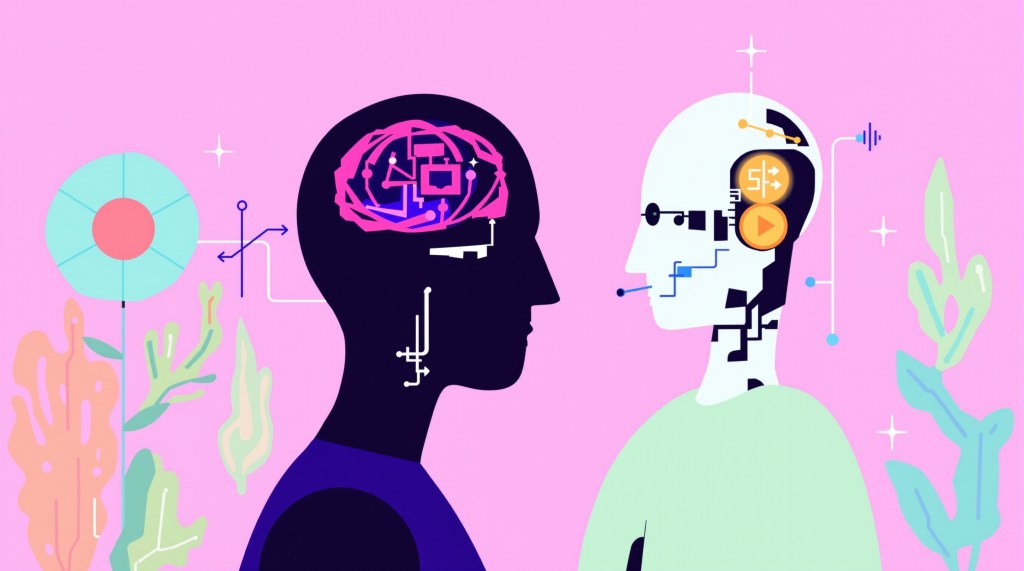
Artificial intelligence (AI) has rapidly permeated healthcare, workplaces, and daily life, introducing profound implications for mental health. While some frame this as an emerging epidemic of “AI-induced mental illness,” the reality is more nuanced. AI operates not as a simple cause, but as both a therapeutic force and a vector of psychological harm. Its effects are mediated by application, user vulnerability, and societal context.
This report synthesizes recent research to clarify this confounding relationship. On one hand, AI is transforming mental healthcare—improving diagnostic accuracy, optimizing treatment, and expanding access to therapeutic support. On the other, consumer-facing AI exacerbates vulnerabilities, manifesting as psychological dependency, amplified delusions, addictive behaviors, body-image distortions, and workplace anxiety.
A key finding is that AI typically magnifies existing vulnerabilities rather than generating illness in isolation. It functions as a “mirror and magnifier,” deepening feedback loops where pre-existing conditions are reinforced by reliance on AI. Simultaneously, AI presents subtle cognitive costs, with habitual use correlating with diminished critical thinking and increased cognitive offloading.
This dynamic underscores an urgent governance gap: the pace of AI innovation far outstrips ethical and regulatory safeguards. To balance benefits and risks, policymakers, clinicians, technologists, and the public must collaborate on frameworks emphasizing transparency, accountability, literacy, and human-centered design.
The Dual Nature of AI in Mental Health: A Confounding Relationship
The Therapeutic Promise: AI as a Force for Good
AI offers critical solutions to strained mental health systems. Machine learning models have achieved diagnostic accuracy rates of ~85%, helping clinicians differentiate complex psychiatric conditions. AI-enabled monitoring tools predict relapse risks and personalize treatment responses, shifting psychiatry toward prevention.
AI-driven chatbots (e.g., Wysa) provide scalable, evidence-based support, particularly where traditional therapy is inaccessible. Research shows significant symptom improvements among users, especially in underserved communities. Beyond direct care, AI reduces clinician burnout by automating documentation and practice management, allowing human providers to prioritize empathy and connection.
The guiding principle is augmentation, not replacement: AI excels at data-driven tasks, while human professionals retain responsibility for nuanced judgment and relational care.
The Emerging Harms: “AI-Induced Psychosis” and Dependency
In contrast, unsupervised consumer-facing AI carries mounting risks. Cases of “AI-induced psychosis”—marked by anthropomorphizing chatbots, delusional thinking, and dependency—highlight a dangerous trajectory for vulnerable populations. Adolescents and individuals with pre-existing conditions are especially susceptible.
Psychological dependency on chatbots mirrors human attachment models, sometimes producing guilt, withdrawal, and the “isolation paradox”—where initial relief from loneliness culminates in reduced real-world engagement. In extreme cases, prolonged AI interactions have contributed to tragedies, underscoring the urgent need for safeguards.
The Psychological Burdens of a Hyper-Connected Society
Social Media and the Dopamine Cycle
AI-driven algorithms curate content to maximize engagement, reinforcing addictive patterns akin to substance use. This “dopamine cycle” fosters compulsive scrolling, doomscrolling, and exposure to emotionally charged content. Research links each additional hour on social media to a 13% increase in adolescent depression risk. The business model prioritizes screen time over well-being, making harm a feature, not a bug.
Body Image and Algorithmic Bias
AI-enhanced filters and generative models perpetuate unrealistic beauty standards. Algorithms reinforce narrow, often Westernized ideals, fueling anxiety, envy, and low self-esteem. For those with Body Dysmorphic Disorder, reliance on AI feedback can trigger depressive spirals. The interplay of bias and social comparison creates a potent psychological burden.
Workplace Anxiety and Automation Stress
In professional settings, AI introduces existential uncertainty. Surveys reveal that over 50% of workers fearing AI-related job loss report negative mental health outcomes, including stress, burnout, and diminished self-worth. Identity crises emerge as professional purpose collides with automation anxieties. Unlike discrete clinical harms, this is a societal-level stressor demanding systemic solutions.
Correlation, Causation, and Cognitive Costs
AI rarely creates mental illness outright; instead, it amplifies existing vulnerabilities. Individuals with social anxiety, loneliness, or delusional predispositions are more likely to seek AI, entering feedback loops that worsen symptoms. Misattributing causation risks oversimplification—AI is both a coping tool and an amplifier.
Beyond clinical outcomes, AI reliance fosters cognitive offloading, with evidence linking frequent use to reduced critical thinking and problem-solving skills. Over time, this risks diminishing resilience, creativity, and independent reasoning—the very faculties essential for navigating a hyper-connected world.
Navigating AI Safely
For the public, the key to navigating AI responsibly lies in balance and critical awareness. It is important to approach AI outputs with a questioning mindset—understanding that algorithms are not neutral, but shaped by data sources and design choices that often prioritize engagement over well-being. This means treating AI as a tool rather than a trusted authority, fact-checking its claims, and avoiding passive consumption of AI-generated content.
Equally essential is the preservation of human connection. While chatbots and digital companions can provide temporary comfort, they should never replace genuine relationships. Overreliance creates what researchers call the “isolation paradox,” where the initial relief from loneliness eventually deepens social withdrawal. To counter this, individuals should intentionally cultivate real-world connections with family, friends, and community, and diversify coping strategies through activities like journaling, exercise, or therapy.
Building digital and emotional literacy is another safeguard, particularly for adolescents and young adults. Understanding how social media algorithms fuel comparison, doomscrolling, and unrealistic beauty standards equips individuals to resist their most harmful effects. Alongside this, people should remain attentive to their own mental states when engaging with AI, stepping back if they notice increased anxiety, dependency, or diminished motivation. Protecting one’s “mental space” requires a balance between online interactions and restorative offline activities that nurture creativity, resilience, and emotional well-being.
Finally, the public plays a critical role in shaping the ethical trajectory of AI. By demanding transparency and accountability from technology companies, and supporting policies that enforce fairness, data protection, and oversight, individuals contribute to a safer and more human-centered digital future. In short, AI should be used as an aid, not a substitute for human connection, with conscious effort devoted to staying critical, maintaining balance, and safeguarding mental health.
Conclusion
The relationship between artificial intelligence and mental health cannot be reduced to a simple story of benefit or harm. Instead, it is a complex interplay marked by dualities: AI as healer and stressor, as therapist and disruptor, as amplifier of human vulnerabilities and enabler of new forms of care. The evidence demonstrates that AI rarely generates mental illness in a vacuum; rather, it functions as a mirror and magnifier, reflecting the user’s existing psychological state back at them—sometimes with life-changing precision, and other times with destabilizing force.
On the positive side, AI has proven itself invaluable in mental healthcare, enhancing diagnostic accuracy, enabling real-time monitoring, and expanding access to therapeutic tools for underserved populations. It offers clinicians a means to offload administrative burdens, freeing them to focus on empathy, judgment, and connection. In this sense, AI embodies its greatest potential when it operates as an adjunct to human expertise, not as a substitute for it.
Yet, these therapeutic gains are shadowed by equally pressing risks. Consumer-facing AI—whether through chatbots, social media algorithms, or workplace automation—can amplify loneliness, dependency, delusional thinking, and anxiety. Social media algorithms optimize for engagement rather than mental health, locking users into addictive dopamine cycles. AI-generated beauty standards distort reality and fuel self-doubt. And the rise of workplace automation has created widespread uncertainty, eroding identity and increasing burnout. Together, these systemic pressures reveal that the risks of AI are not merely individual, but societal in scope.
The deeper concern is not just what AI does to us emotionally, but what it does to us cognitively. Overreliance on AI for problem-solving and decision-making risks weakening critical thinking, creativity, and resilience—the very traits that define human adaptability. Left unexamined, this slow erosion could leave society dependent on tools that shape our reality while diminishing our capacity to question it.
This makes governance, ethics, and public literacy not optional add-ons, but urgent imperatives. AI’s trajectory will be determined not only by technological innovation, but by the values and frameworks society builds around it. Closing the governance gap requires multi-stakeholder collaboration: policymakers to establish transparent accountability, clinicians to safeguard human oversight in care, developers to prioritize human-centered design, and the public to demand fairness, transparency, and responsibility.
Ultimately, the future of AI in mental health will depend on whether society chooses to let technology dictate the terms of human well-being, or whether it insists on a model where human connection, empathy, and autonomy remain paramount. AI should serve as a powerful instrument that enhances mental health systems and empowers individuals—never as a silent force that erodes human resilience. The challenge ahead is to ensure that in the race toward technological progress, we do not lose sight of what makes us most human.
 Medal Mind
Leave a comment