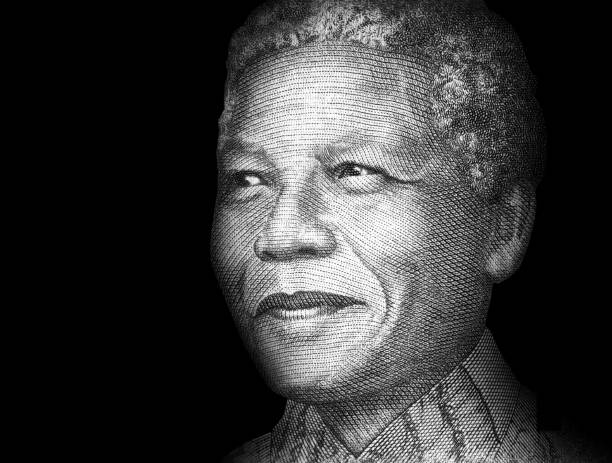
Nelson Mandela’s philosophy of forgiveness took root in South Africa, a nation scarred by decades of apartheid and racial injustice. His experiences, struggles, and leadership as the first Black president of South Africa turned the country’s legacy of division and pain into one of reconciliation, justice, and healing.
Mandela’s journey as a political leader unfolded during the turbulent mid-20th century, when the struggle against apartheid was intensifying. His approach to forgiveness became especially relevant in the post-apartheid era when South Africa sought to rebuild its fractured society.
Apartheid
For much of the 20th century, South Africa was governed under apartheid, a system of institutionalized racial segregation and discrimination that affected the Black majority while maintaining privileges for the white minority. This deeply unjust system was defended by the South African government through harsh laws, violence, and systematic oppression.
Mandela’s life was marked by his activism against apartheid. He was arrested in 1962 and sentenced to life imprisonment for his role in planning sabotage against the apartheid regime. His 27 years behind bars allowed him time to reflect, but also solidified his reputation as a symbol of resistance against racial tyranny.
In 1990, after years of internal and international pressure, apartheid officially began to unravel. Mandela was released, and soon after, he entered into negotiations with the South African government to dismantle apartheid and lead the country into a new democratic era.
Upon his election as president in 1994, Mandela faced the monumental task of reconciling a divided nation. The Truth and Reconciliation Commission (TRC), led by Archbishop Desmond Tutu, was one of the primary vehicles used to promote national healing by offering amnesty to those who fully confessed to their crimes during apartheid. Mandela’s leadership in embracing forgiveness, rather than retribution, played a pivotal role in the success of the TRC and in the building of a democratic South Africa.
The fight against apartheid was the defining social and political struggle in South Africa for much of the 20th century. Mandela was a central figure in this movement, first as an activist and later as a political leader.
Following the dismantling of apartheid, South Africa had to confront its painful history. Rather than advocating for revenge, Mandela championed the cause of reconciliation and national unity.
Nelson Mandela: A Symbol of Peace and Perseverance
Mandela became an international icon for his unwavering commitment to justice, freedom, and equality. His personal philosophy of forgiveness not only guided his political decisions but also shaped the ethical foundations of post-apartheid South Africa.
• Desmond Tutu: Archbishop Tutu, a key ally in the struggle against apartheid and an advocate for the TRC, shared Mandela’s vision of reconciliation. Tutu’s moral and spiritual leadership in the process of healing helped complement Mandela’s political approach to forgiveness.
Mandela’s Belief in Forgiveness
At the core of Mandela’s philosophy was a profound belief in the power of forgiveness to heal individuals, relationships, and societies. His personal journey reflected this belief. Mandela famously stated that “resentment is like drinking poison and then hoping it will kill your enemies.” He understood that holding onto anger and seeking revenge would only prolong suffering and prevent true peace from emerging.
Mandela’s idea of forgiveness was rooted in the concept of transformative justice. Unlike traditional justice, which is often punitive, transformative justice seeks to heal individuals and society by confronting the past, recognizing the harm done, and offering forgiveness as a path toward reconciliation. Mandela’s support for the TRC was a manifestation of this belief. Through the TRC, victims of apartheid could testify to their suffering while perpetrators were encouraged to take responsibility for their actions in exchange for amnesty. By creating a space for truth-telling and collective healing, Mandela hoped to build a future rooted in unity and understanding, rather than revenge and division.
Central to Mandela’s view of forgiveness was the African philosophy of Ubuntu, which emphasizes interconnectedness, compassion, and mutual respect. Ubuntu holds that our humanity is bound up with the humanity of others, and that by nurturing others, we nurture ourselves. Mandela’s practice of forgiveness was deeply influenced by this philosophy. He did not see forgiveness as an act of weakness or surrender, but as a strength that affirmed the dignity of both the victim and the perpetrator.
Parallels/Application Today
In today’s world, Mandela’s approach to forgiveness remains an important lesson in resolving conflicts, both personal and societal. In the context of modern political struggles, especially those dealing with ethnic, racial, and historical injustices, his model of reconciliation provides a framework for addressing longstanding grievances without perpetuating cycles of violence. For individuals facing personal struggles, Mandela’s belief in forgiveness can serve as a reminder of the power of letting go of anger and bitterness.
Today, countries facing the aftermath of brutal conflicts or authoritarian regimes, such as those in the Balkans or Rwanda, can look to Mandela’s model for guidance on reconciliation. Just as he led South Africa from the ashes of apartheid into a more just and peaceful future, nations facing divisions may find hope in the idea of collective forgiveness as a tool for healing.
Mandela’s emphasis on forgiveness also offers valuable lessons for personal growth. Many individuals carry the weight of past wrongs, whether inflicted upon them or by them. Letting go of these burdens can be transformative, allowing people to reclaim their emotional and mental well-being. In today’s interconnected world, where people are often exposed to the suffering and injustices of others, Mandela’s approach teaches that healing begins within, through self-forgiveness and empathy for others.
Individuals can apply Mandela’s philosophy of forgiveness in their own lives by reflecting on their experiences and relationships. Whether they are dealing with personal grudges, familial rifts, or professional conflicts, they can ask themselves: “What is the cost of holding onto anger?” For some, forgiveness may require recognizing the humanity of those who have wronged them, understanding their struggles, and ultimately choosing to let go of the pain. This does not mean forgetting or excusing the wrongdoing, but rather freeing oneself from the grip of resentment.
In broader social and political contexts, movements advocating for justice and equality can integrate Mandela’s principles of reconciliation into their agendas. While accountability is essential, ensuring that forgiveness and healing are prioritized alongside justice can create spaces for restorative processes that allow for societal growth. Movements that call for truth-telling and acknowledgement of past harms—like the #MeToo movement or Black Lives Matter—can draw inspiration from Mandela’s understanding that justice is not only about punishment but also about healing wounds.
Tone and Style
The tone of Mandela’s philosophy is deeply reflective, calm, and focused on long-term healing. His approach was not to dwell on the past but to look forward to the potential of human connection and unity. When writing about Mandela’s philosophy of forgiveness, it is crucial to convey a sense of hope and transformative power. The style should reflect the dignity and wisdom that Mandela embodied throughout his life, using clear, thoughtful language that engages the reader on an emotional level. Additionally, it is important to weave in stories and examples of his life to inspire readers, showing that forgiveness is not only a moral act but also a pragmatic tool for healing and peace.
In summary, Nelson Mandela’s philosophy of forgiveness stands as a monumental example of how personal healing, political justice, and societal unity can be achieved through the act of letting go of anger and embracing reconciliation. By focusing on human dignity and the power of empathy, Mandela’s approach to forgiveness remains a crucial guide for today’s struggles for justice and peace. His life reminds us that true freedom is not just the absence of oppression but the presence of compassion, understanding, and the willingness to heal from past wounds.
 Medal Mind
Leave a comment