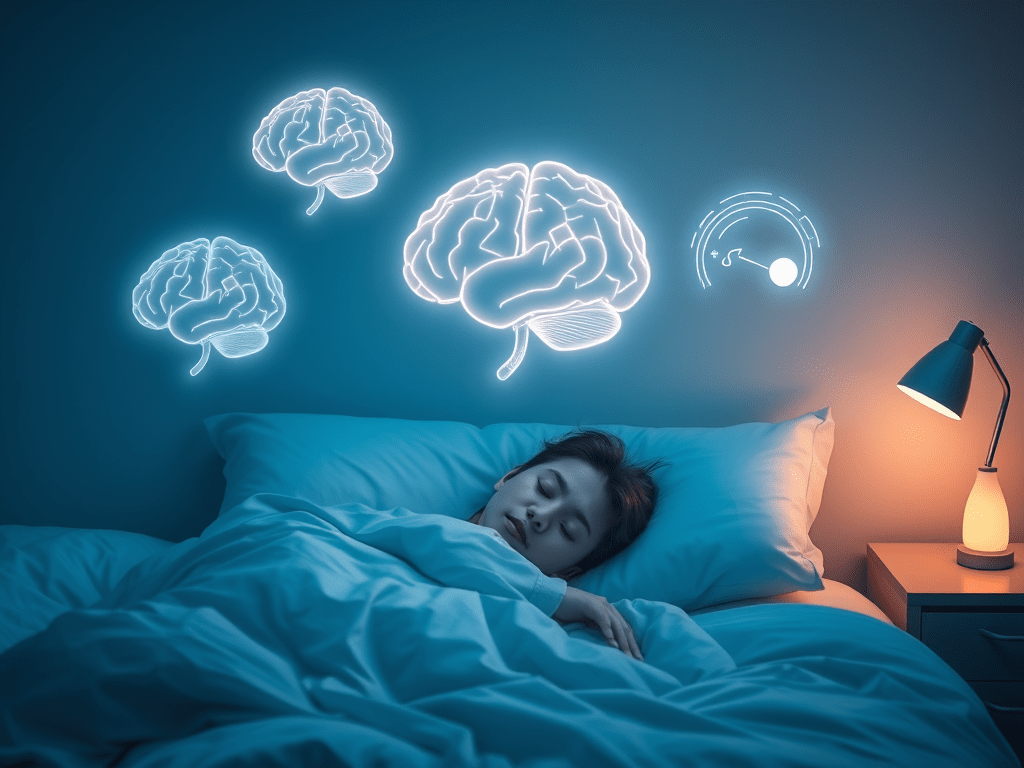
The Neuroscience of Sleep
Sleep is a dynamic state regulated by the circadian rhythm and sleep homeostasis. Brain chemicals like melatonin, GABA, and serotonin orchestrate the sleep cycle, ensuring physical recovery (NREM sleep) and mental rejuvenation (REM sleep). Supporting these processes with nutrition, meditation, and behavioral strategies can enhance sleep quality and duration.
Sleep is regulated by several interconnected brain regions working together to manage transitions between wakefulness and sleep. The hypothalamus, particularly the suprachiasmatic nucleus (SCN) and ventrolateral preoptic nucleus (VLPO), acts as the central control for circadian rhythms and promotes sleep by inhibiting wake-promoting areas. The brainstem, including the reticular formation, locus coeruleus, and dorsal raphe nuclei, facilitates transitions between sleep stages and regulates REM sleep. The thalamus blocks most sensory signals during non-REM sleep, while the pineal gland produces melatonin to help initiate and maintain sleep. The cerebral cortex reduces activity during deep sleep, allowing rest and recovery, while the amygdala becomes active during REM sleep to process emotions and dreams. Finally, the basal forebrain releases adenosine, which builds up during wakefulness and promotes sleep pressure, integrating these functions into a seamless sleep-wake cycle.
Foods, Teas, and Supplements for Better Sleep
Sleep-Enhancing Foods
Incorporating sleep-supportive foods can naturally boost melatonin and serotonin production:
1. Tart Cherries: A natural source of melatonin.
2. Bananas: Rich in magnesium and potassium, which relax muscles.
3. Kiwi: Studies suggest eating kiwi before bed improves sleep onset and duration.
4. Oats: Contain melatonin and complex carbs that support serotonin production.
5. Almonds: Provide magnesium, which helps with relaxation.
Teas for Better Sleep
Herbal teas offer calming properties that prepare the body and mind for rest:
1. Chamomile Tea: Contains apigenin, which binds to brain receptors to promote sleepiness.
2. Valerian Root Tea: Aids in reducing anxiety and improving sleep quality.
3. Lavender Tea: Calms the nervous system and promotes relaxation.
4. Peppermint Tea: Soothes the digestive system and aids in relaxing the body.
Supplements for Sleep Support
While supplements should complement—not replace—good habits, they can be effective:
1. Melatonin: Best for resetting circadian rhythm or jet lag. Start with 0.3–1 mg.
2. Magnesium Glycinate: Supports muscle relaxation and GABA production.
3. L-Theanine: Calms the mind without sedation.
4. Ashwagandha: Reduces stress hormones and improves sleep quality.
5. 5-HTP: A precursor to serotonin, supporting mood and melatonin synthesis.
6. CBD Oil: Reduces anxiety and promotes a sense of calm.
Specific Meditations for Sleep
Guided Sleep Meditations
1. Body Scan Meditation:
– Lie on your back.
– Bring attention to each body part, starting at your toes and moving up to your head.
– Acknowledge and release tension in each area.
2. Loving-Kindness Meditation:
– Repeat phrases like, “May I be safe, may I be healthy, may I be peaceful,” focusing on positive intentions.
3. Visualization Meditation:
– Imagine a calming scene, such as a serene beach or quiet forest.
– Engage your senses—hear the waves, feel the sand, smell the fresh air.
4. Yoga Nidra:
– A deeply relaxing guided practice that moves you through different layers of consciousness. Many free recordings are available online.
Breathing Exercises
1. 4-7-8 Technique:
– Inhale through the nose for 4 seconds.
– Hold the breath for 7 seconds.
– Exhale slowly through the mouth for 8 seconds.
2. Box Breathing:
– Inhale for 4 seconds, hold for 4 seconds, exhale for 4 seconds, and pause for 4 seconds.
Behavioral Changes for Better Sleep
Environmental Adjustments
1. Use Earplugs:
– Block out noise from traffic, neighbors, or snoring partners.
– Silicone or foam options work best.
2. Wear an Eye Mask:
– Reduces light exposure, especially if blackout curtains aren’t available.
– Opt for cooling gel masks for added comfort.
3. Invest in White Noise or Nature Sounds:
– Machines or apps that generate consistent background noise mask sudden disruptions.
4. Declutter Your Bedroom:
– A clean, organized space promotes calm and reduces stress.
Behavioral Changes
1. Bedtime Rituals:
– Establish a consistent pre-sleep routine that includes dimming lights, reading, or journaling.
2. Limit Stimulants:
– Avoid caffeine after 2 PM.
– Avoid heavy or spicy meals within 3 hours of bedtime.
3. Digital Detox:
– Avoid screens 1–2 hours before bed. Use blue-light-blocking glasses if screen time is unavoidable.
4. Sleep-Inducing Activities:
– Engage in relaxing hobbies like knitting, sketching, or listening to calming music before bed.
5. Physical Relaxation:
– Take a warm bath or shower 1–2 hours before bed. The drop in body temperature afterward signals your brain it’s time to sleep.
6. Restrict Clock Watching:
– Turn clocks away from your bed to avoid anxiety about the time.
Closing Thought
Sleep is the cornerstone of health and wellness. By combining neuroscience-backed strategies with mindful nutrition, meditation, and practical adjustments, you can unlock restorative sleep. Small, consistent efforts will lead to transformative results, helping you wake up energized, focused, and ready to embrace each day.
 Medal Mind
Leave a comment